
Raised Prices, Suspect Results, and Alternatives
I’ve been shopping at Goodwills in Arizona for over half a decade, and not just once every couple months, but about a dozen times a week—every week. In the past three years, Goodwill has gone from a decent thrift store to what seems to be an extremely greedy and shady company. I understand that Goodwills are run differently in different locations, and so this post is specifically about Goodwill of Central and Northern Arizona.
Raised prices
A good way to begin the discussion on Goodwill’s price increases is to look at what used to be known as Dollar Day. For as long as I can remember, Goodwill has done a sale on Thursday, in which all of the oldest tags of a specific color—the items with the oldest rotating tag are about 6 weeks old—are just $1. This was the case until January 5th, 2023. Goodwill sent out an email informing customers that they would be doubling Dollar Day to make the old tags $2. Inflation in 2022 was 6.5%, and so in response, Goodwill raised their lowest price items 100%.
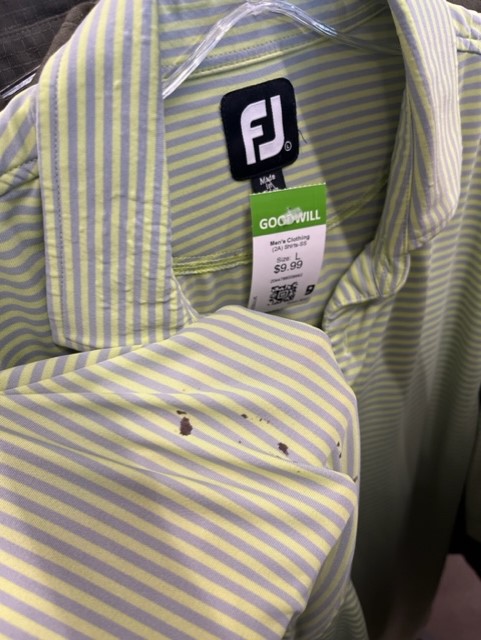
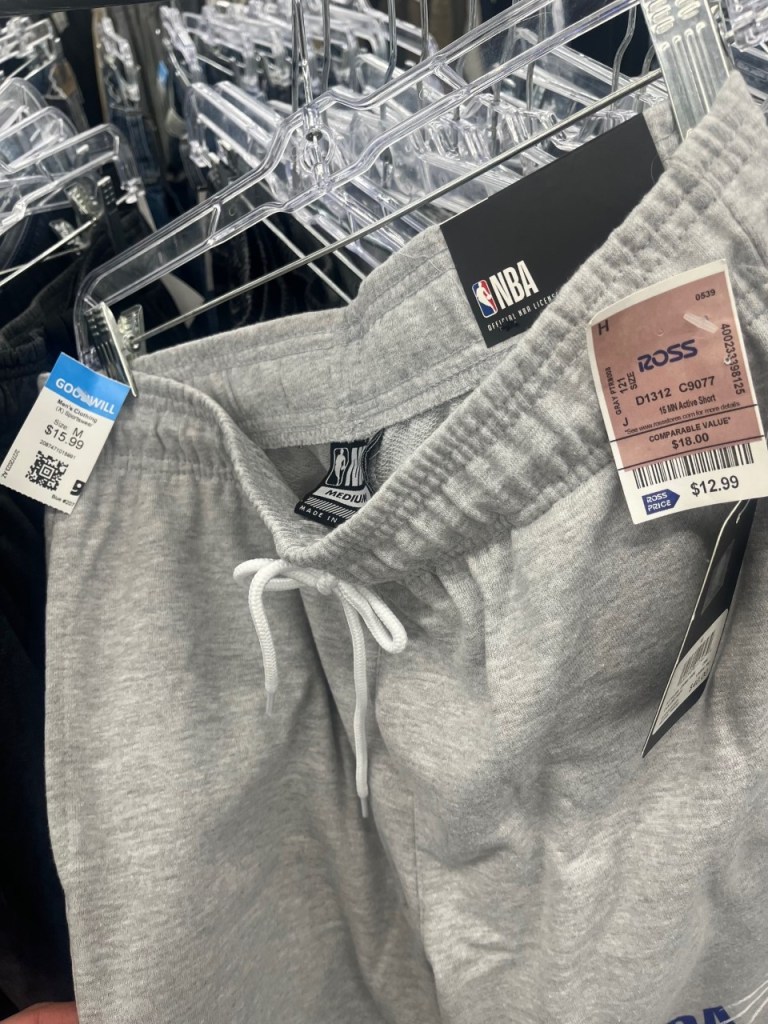
But doubling Dollar Day is just the beginning of the drastic price increases over the past 5 or so years. I have seen the average price for men’s button up shirts go from about $4.99-$5.99 to $12.99-$14.99. Women’s tank tops have skyrocketed from $1.99 to $5.99 at many stores around the valley. Basic Tommy Bahama shirts covered in stains (Goodwill employees are not supposed to put flawed clothing items out on the floor, but because of sale quotas by department, they often put stuff out anyway) priced at $24.99. Blatantly counterfeit items are often priced for $25-$50.You would think if a company was going to charge that much for an item they would take the time to authenticate it. I’ve even seen on more than one occasion items that are new with tags, and the Goodwill price is higher than what is on the tag. Oh, and did I mention that all of these items are donated? Goodwill’s inventory cost is absolute zero. Like most businesses they have overhead such as property rent and employees to pay (more on that later), but unlike other businesses, their inventory cost is zero.

A stained polo priced at $9.99
Prior to COVID, these prices would have been slightly more acceptable for the simple fact that Goodwill used to do a half off everything sale every Saturday. Once COVID hit, Goodwill understandably paused “Sale Saturday’s” in order to avoid crowds. However, this sale was never to return (along with closing all dressing rooms, which, if one was cynical, you might say they have been kept closed because people will buy more items not knowing if they fit. Even if a percentage are returned, they are returned for a gift card, and so the money is already Goodwill’s). Savers still does 50% off everything sales on Mondays.
No longer a treasure hunt
A large part of the appeal of going to thrift stores is finding unique and valuable stuff at a good price. The idea is, people donate their used items, the thrift store prices the items, and then all of the items are put out in the store for people to discover. I personally know two employees (both wish to be anonymous) who work at different stores, and both have witnessed managers and employees keep items for themselves. Employees are told to bring items they believe to be valuable to their managers, who will look them up online and price them high. However according to anecdotes, managers will sometimes take the items—never to be seen again.
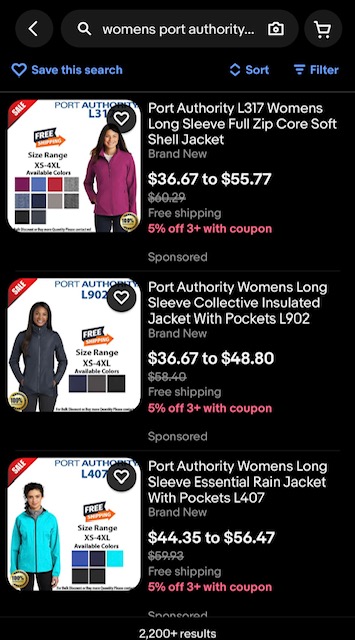
Even if the employees don’t break the rules and take unique items, Goodwill sells items they deem worthy on eBay, Amazon, and on their new website ReclaimedFashion where you can find things like a used Port Authority jacket for $34.95 plus shipping (brand new ones are currently listed on eBay for $36.67 with free shipping). If the managers or employees deem it to be valuable, don’t expect to find it while shopping around for treasures.
The things that do make it out to the floor are often ruined by employees tagging straight through the fabric instead of tagging the brand tag or the seam. Holes are made in the fabric. I have see hundreds of items ruined from this. Somehow this only happens at Goodwill—every other thrift store tags through the clothing seams or the brand tag.

Where does the money go?
Goodwills missions and operations differ in different locations so I just want to reiterate that I’m focusing only on Goodwill of Central and Northern Arizona.
It’s impossible for me to know exactly how Goodwill’s money is spent, but I will list out some facts and observations and you can decide for yourself how effectively—and how legitimately—it seems the nonprofit uses their revenue:
- Goodwill of Central and Northern Arizona’s mission statement according to it’s website is “[Goodwill is a] non-profit organization dedicated to ending poverty through the power of work. Goodwill takes a holistic approach to employment by providing job seekers the tools to feel confident, purpose driven, and successful. Goodwill empowers individuals, strengthens families, and builds stronger communities. Donating or shopping at Goodwill supports our no-cost career services, which are available to anyone looking for a new job, education, or training.”
- My two anonymous sources both make $13.80 an hour.
- According to nonprofitlight.com, the President of Goodwill of Central and Northern Arizona, Jackie Halleen, has a salary of $427,877 a year
- Susan Barnes, the Vice President, makes $372,022 a year.
- The next 8 members down the hierarchy make between $202,076 and $338,085 a year.
- Goodwill of Central and Northern Arizona’s total revenue for 2021 was $247,647,170
- Goodwill’s listed expenses for 2021 were $230,902,895 and of these expenses $26,812,361 went towards “management”, and $196,708,042 went towards “thrift operations” (such as paying workers $13.80 an hour). According to the 2021 financial overview, $5,770,237 went towards “mission services”. That is a whopping 2.4% of expenses being spent on what they call their mission.
- There used to be a handful of Goodwill “Career Centers” around my area but within the past couple of years, most of them have closed down.
- According to the 2021 statement, 1,960 Arizonians were placed in employment through Goodwill
Personally I have no problem with CEO’s getting paid high salaries if they are effective at their jobs. But as a nonprofit, isn’t the job of the CEO’s to maximize progress towards their mission? Is $247,647,170 a year worth 1,960 new jobs? A response of pushback I have gotten is that Goodwill employees many people at their many locations. However, a company does not need to be a nonprofit to employ people, and so I do not see that—in and of itself—as something deserving of nonprofit status.
Side note, these numbers are for 2021 and due to all the price raises and stores opened in the past 2 years, they are undoubtedly getting more revenue now in 2023.
What’s the alternative?
As long as we keep shopping at Goodwill and paying the ever raising prices they ask for, they will continue to raise them. To them, their business model is working. If, instead we vote with our money and go elsewhere, they will be forced to reevaluate their business practices.
The same goes for donating. If you keep donating items to Goodwill, they will continue to price up your items, and if they deem them worthy, they won’t even make it out onto the floor. No longer is donating to Goodwill a way to get your items to impoverished people for cheap. Expect your donated sweater to be priced at a minimum of $7.99.
Whether you are a reseller, a thrifting enthusiast, or someone who needs things for cheap, there are plenty of other places to donate to and shop in the valley. Here are just a few of them:
Savers (A bit on the pricier side, but they have 50% off everything on Mondays and 25% off everything on Thursdays. Prices seem to be about the same as Goodwill’s overall and they usually have cleaner/nicer items.)
Salvation Army Thrift Stores
St. Vincent de Paul Thrift Stores
Deseret Industries Thrift Stores
Arizona Humane Society Thrift Store
Yard Sales
Estate Sales

 TheSisyphusBlog